

Chat With Us
We offer 24-hour chat support


Release agents are specialized compounds that prevent molded materials from sticking to mold surfaces, enabling clean part removal and extending mold life. In industrial manufacturing, the right release agent can significantly impact production efficiency, part quality, and overall costs. This comprehensive guide explores everything you need to know about release agents for molding and casting processes.
According to recent industry reports, the global mold release agents market is projected to reach $2.3 billion by 2027, growing at a CAGR of 5.7% from 2022. This growth is driven by expanding applications across automotive, aerospace, and consumer goods manufacturing sectors.
Download our comprehensive selection guide to find the perfect release agent for your specific molding application.
Various Mold Releases
Release agents come in various formulations, each designed for specific applications and materials. Understanding the differences between these types is crucial for selecting the right product for your molding or casting process.
Silicone-based release agents provide excellent release properties for a wide range of materials. They create a thin, durable film that withstands high temperatures and multiple cycles.
Water-based formulations offer environmentally friendly alternatives with low VOC emissions. They provide good release properties while being safer to handle and store.
Solvent-based agents dry quickly and form thin, uniform films. They're ideal for complex mold geometries and applications requiring minimal build-up.
These advanced formulations chemically bond to the mold surface, allowing multiple releases before reapplication is necessary. They're ideal for high-volume production.
Specialty formulations address specific challenges like high-temperature applications, food-grade requirements, or medical-grade specifications.
PTFE and other dry film lubricants provide excellent release properties without wet residue. They're ideal for applications where liquid contamination must be avoided.
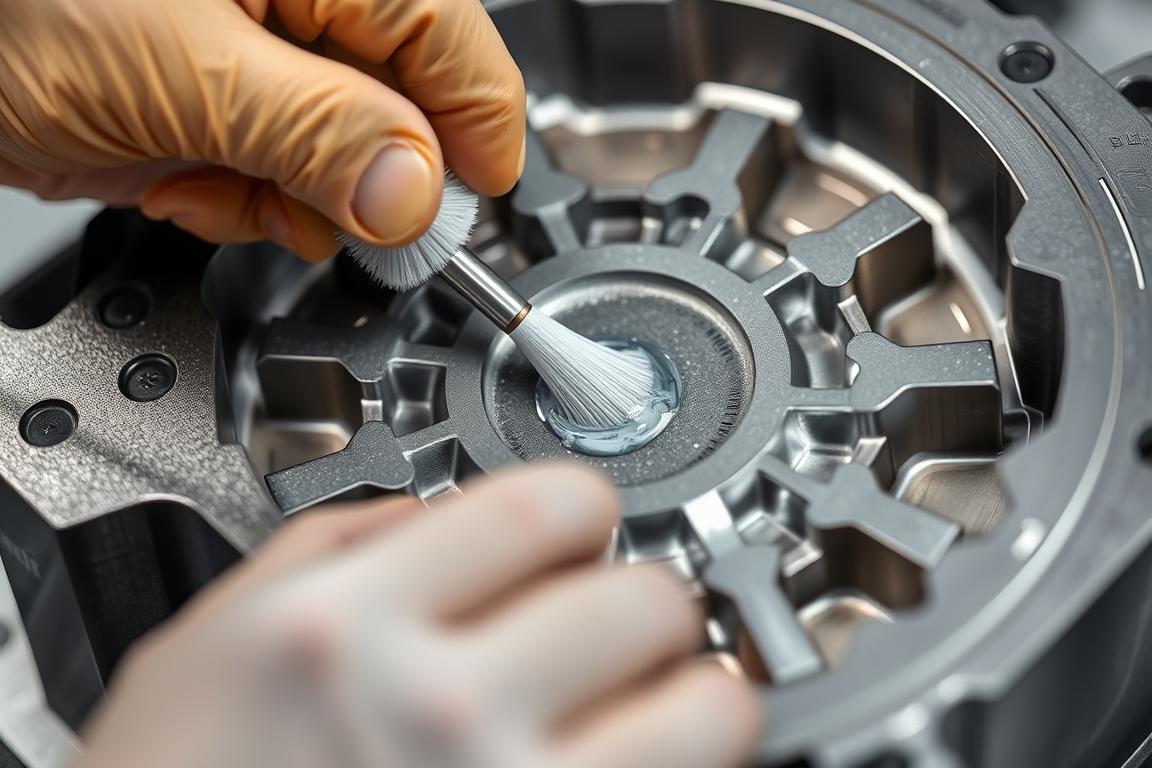
Application of semi-permanent release agent to a complex mold surface
Release agents are essential across numerous industries and manufacturing processes. Their application varies depending on the materials, production volumes, and end-product requirements.
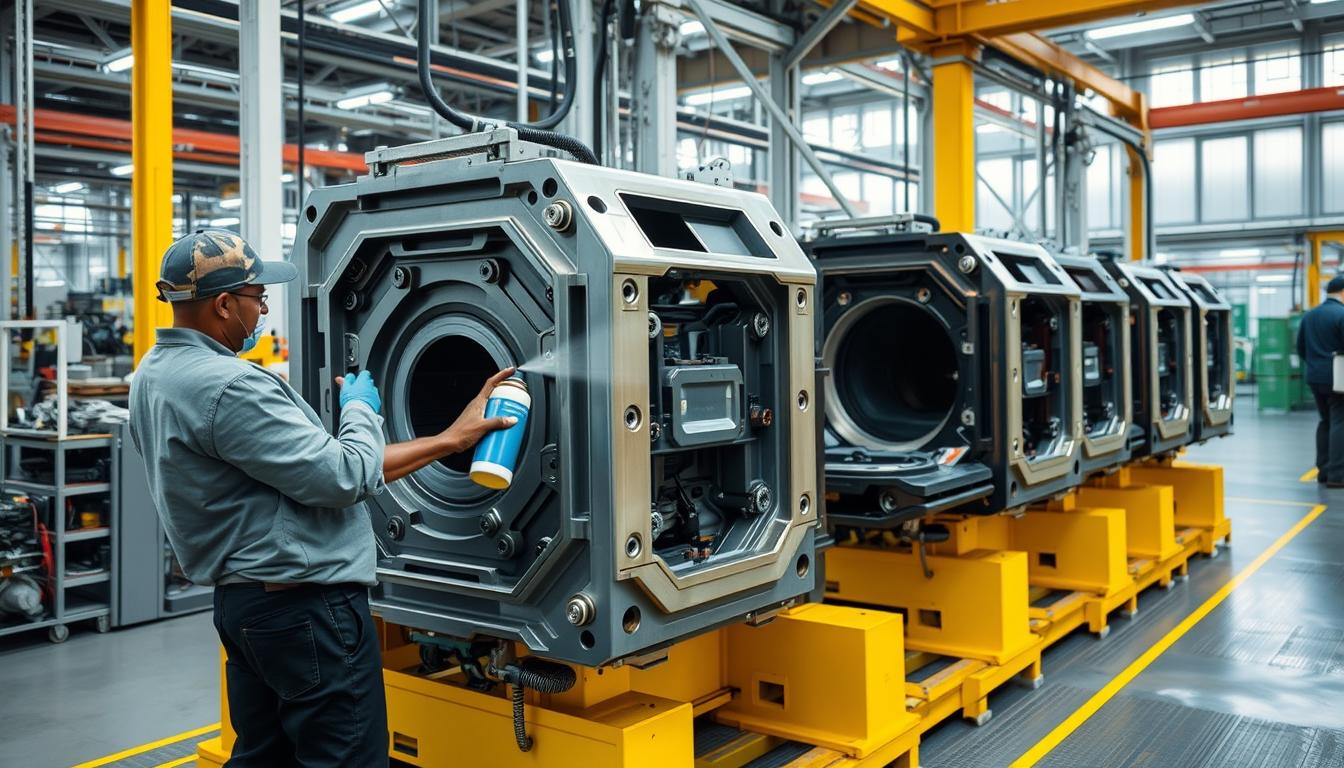
The automotive industry relies heavily on release agents for producing components ranging from interior trim to under-hood parts. According to industry data, automotive applications account for approximately 28% of the global release agent market.

Aerospace manufacturing demands high-performance release agents that can withstand extreme temperatures and provide consistent results for critical components.

From household appliances to electronics enclosures, consumer goods manufacturing relies on efficient molding processes enabled by effective release agents.
The composite industry requires specialized release agents that won't interfere with resin curing while providing excellent release properties.

Application of release agents in large-scale composite manufacturing
Our application specialists can help you select the optimal release agent for your specific manufacturing process.
Explore Industry SolutionsImplementing the right release agent solution delivers multiple advantages that directly impact production efficiency, part quality, and overall manufacturing costs.
Proper release agents significantly reduce part defects by preventing sticking and ensuring complete part release. Studies show defect rates can be reduced by up to 87% with optimized release agent selection.
By reducing the force needed to remove parts and preventing material buildup, quality release agents can extend mold life by 30-50%, representing significant cost savings on expensive tooling.
The right release agent helps reproduce mold surface details with high fidelity, resulting in better aesthetics and dimensional accuracy for finished parts.
While representing only 1-3% of total production costs, release agents can impact 100% of production efficiency. The right choice delivers substantial ROI through reduced cycle times and waste.
"Selecting the appropriate release agent is one of the most overlooked yet impactful decisions in optimizing molding operations. It affects everything from cycle time to part quality and equipment longevity."
Choosing the optimal release agent requires consideration of multiple factors related to your specific application, materials, and production requirements.

The molded material significantly influences release agent selection. Different polymers, composites, and elastomers require specific release chemistries for optimal results.
Process temperature is a critical factor in release agent selection. High-temperature applications require specially formulated products that won't degrade under heat.
Regulatory requirements and workplace safety concerns increasingly influence release agent selection, with many manufacturers transitioning to lower-VOC formulations.
| Release Agent Type | Best For | Temperature Range | Environmental Profile | Relative Cost |
| Silicone-Based | General purpose molding, rubber, plastics | Up to 400°F (204°C) | Medium VOCs | Low-Medium |
| Water-Based | Polyurethane, concrete, epoxy | Up to 300°F (149°C) | Low VOCs | Medium |
| Solvent-Based | Complex geometries, fast cycles | Up to 500°F (260°C) | High VOCs | Medium |
| Semi-Permanent | High-volume production, complex parts | Up to 700°F (371°C) | Medium VOCs | High |
| Specialty High-Temp | Engineering resins, metal casting | Up to 1800°F (982°C) | Varies | Very High |
Proper application technique is just as important as selecting the right release agent. Following best practices ensures optimal performance and consistent results.
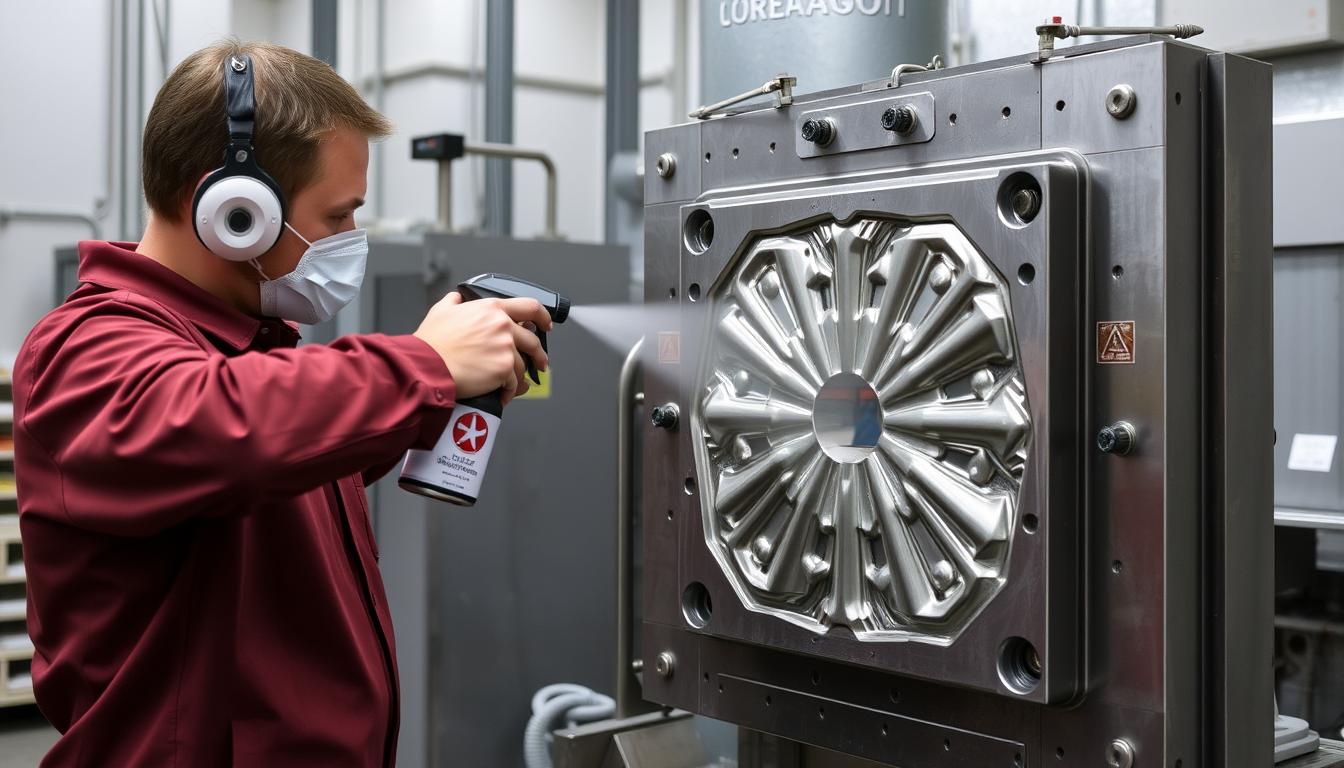
Aerosol and spray applications are the most common methods for applying release agents in production environments.
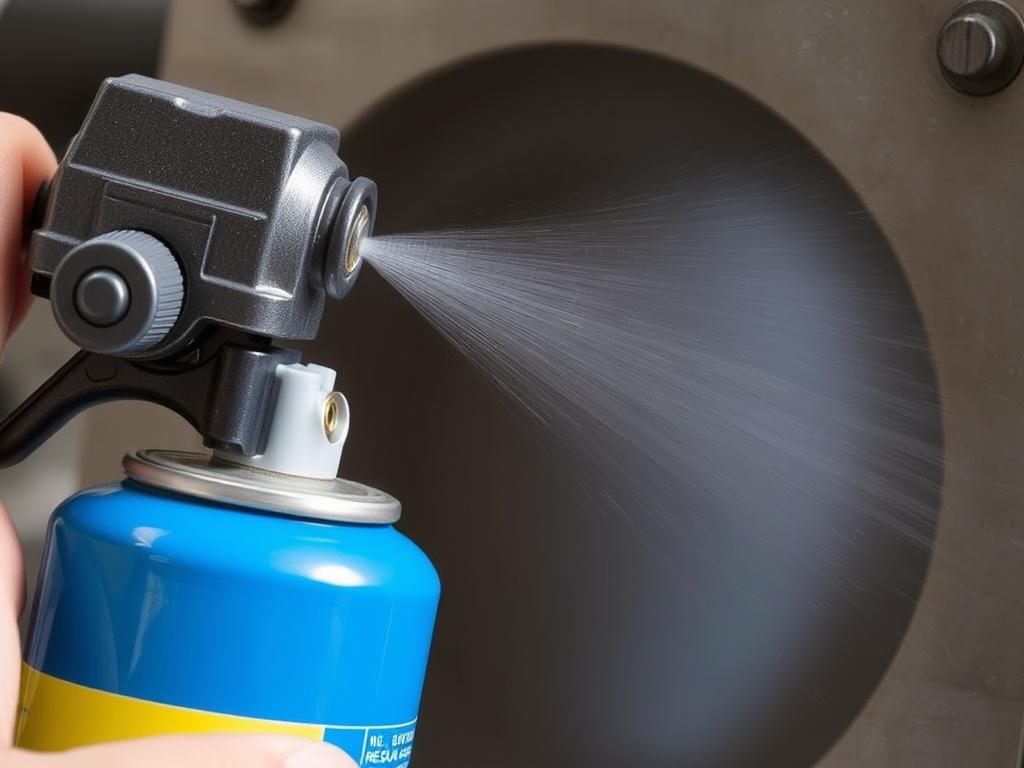
For semi-permanent and some specialty release agents, wipe-on application provides the most controlled and efficient results.
Always follow proper safety protocols when working with release agents:
The release agent industry continues to evolve with new formulations addressing environmental concerns, performance requirements, and application efficiency.
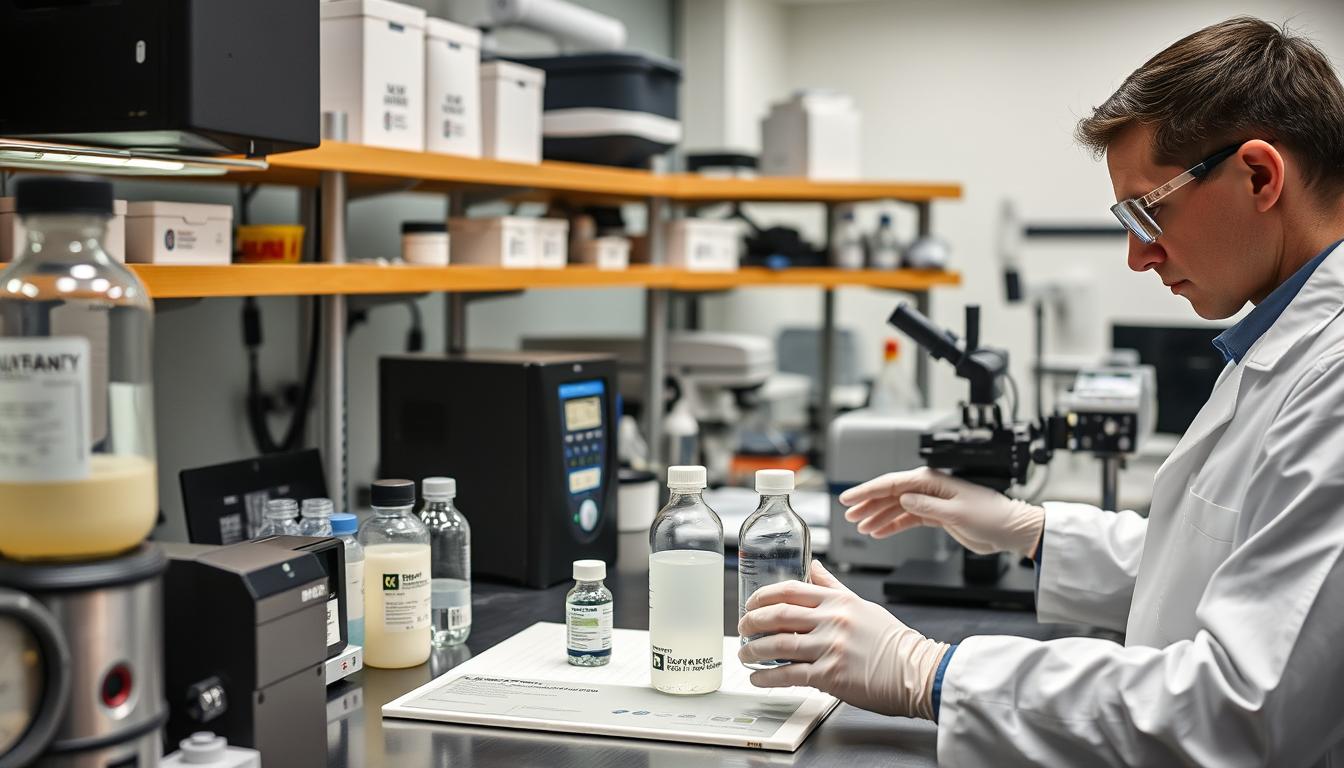
Environmental regulations and sustainability initiatives are driving development of lower-impact release agents.
Nano-scale additives are revolutionizing release agent performance by creating more durable and effective release surfaces.
Modern release agents often incorporate additional benefits beyond simple part release.

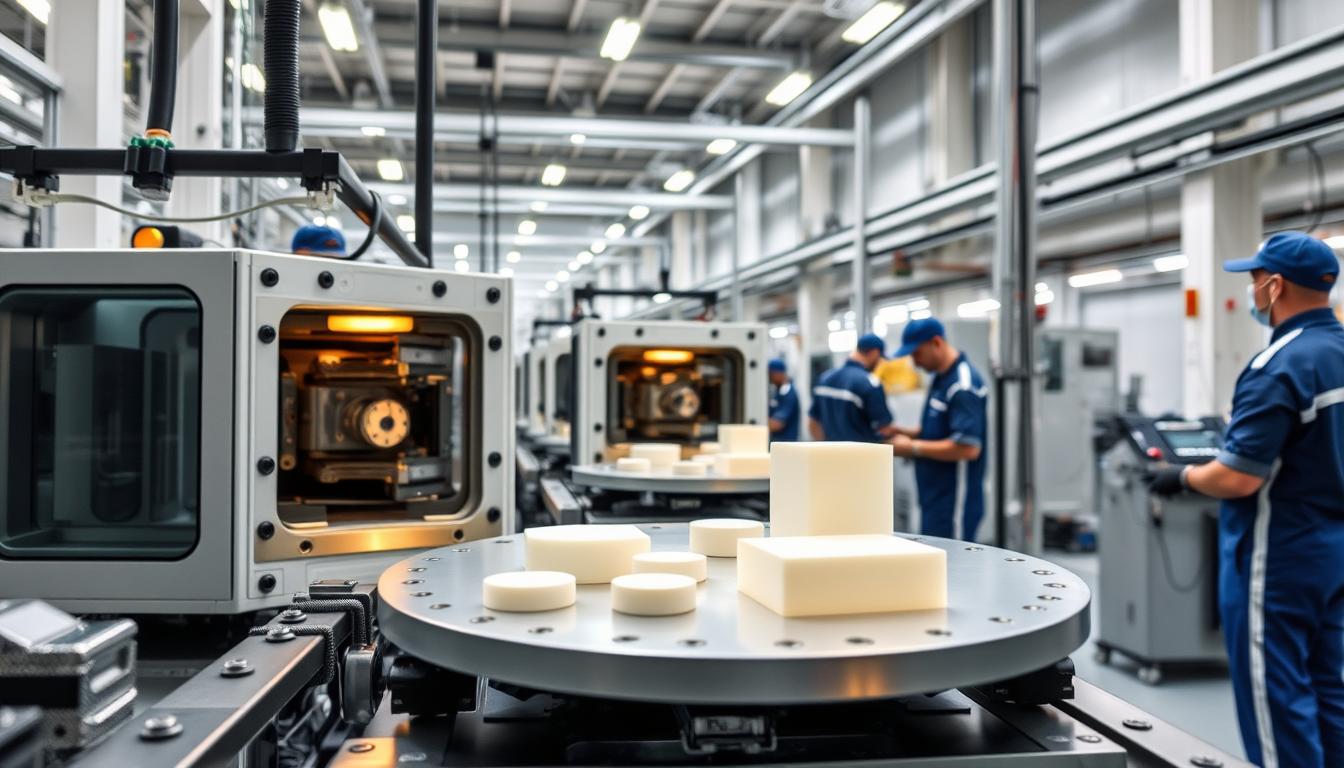
Automated application systems improve consistency and reduce waste
Yes, many standard silicone-based release agents can interfere with paint adhesion, printing, and bonding operations. For parts requiring post-molding decoration, use paintable or non-silicone release agents specifically formulated for these applications. Always test compatibility with your specific painting process.
Excess release agent can be removed using appropriate solvents or cleaners compatible with your part material. For silicone releases, specialized silicone removers are most effective. For water-based releases, warm water and mild detergent often suffice. Always test cleaning methods on a small area first to ensure compatibility.
Application frequency depends on the type of release agent, process conditions, and material being molded. Conventional releases typically require application before each cycle, while semi-permanent releases may last 5-30+ cycles. Monitor part quality and release performance to determine optimal reapplication intervals for your specific process.
Yes, there are release agents specifically formulated to comply with FDA regulations for indirect food contact. These products typically contain ingredients listed in 21 CFR 174-178 and are suitable for food packaging, containers, and processing equipment. Always verify the specific compliance of any release agent for your food contact application.
While some general-purpose release agents work across multiple materials, optimal results are typically achieved with material-specific formulations. Different polymers and resins have varying chemical properties and release requirements. Using a release agent specifically formulated for your material will generally provide better performance and part quality.
| Characteristic | Silicone-Based Agents | Non-Silicone Agents |
| Release Effectiveness | Excellent for most materials | Good to excellent, material-specific |
| Cost | Lower initial cost | Generally higher cost |
| Post-Processing | May interfere with painting/bonding | Compatible with most post-processes |
| Temperature Resistance | Good (up to 400°F typical) | Varies widely by formulation |
| Cleanup | More difficult, requires special cleaners | Generally easier to remove |
| Build-up Over Time | Can accumulate on molds | Typically less build-up |
| Application Ease | Simple application | May require more precise application |
Surface finish comparison between silicone and non-silicone release agents
Our technical team can help you identify the optimal release solution for your specific application requirements.
Selecting and properly applying the right release agent is a critical factor in achieving efficient, high-quality molding and casting operations. While often representing a small portion of overall production costs, release agents significantly impact part quality, cycle time, and mold longevity.
As manufacturing processes continue to advance, release agent technology evolves alongside them, offering new solutions for challenging applications and addressing environmental concerns. By understanding the types, benefits, and selection criteria for release agents, manufacturers can optimize their processes and gain a competitive edge.
For best results, consider working with release agent specialists who can provide application-specific recommendations based on your unique requirements. The right release agent solution is not just a production necessity—it's a strategic advantage in modern manufacturing.
Leave a comment